







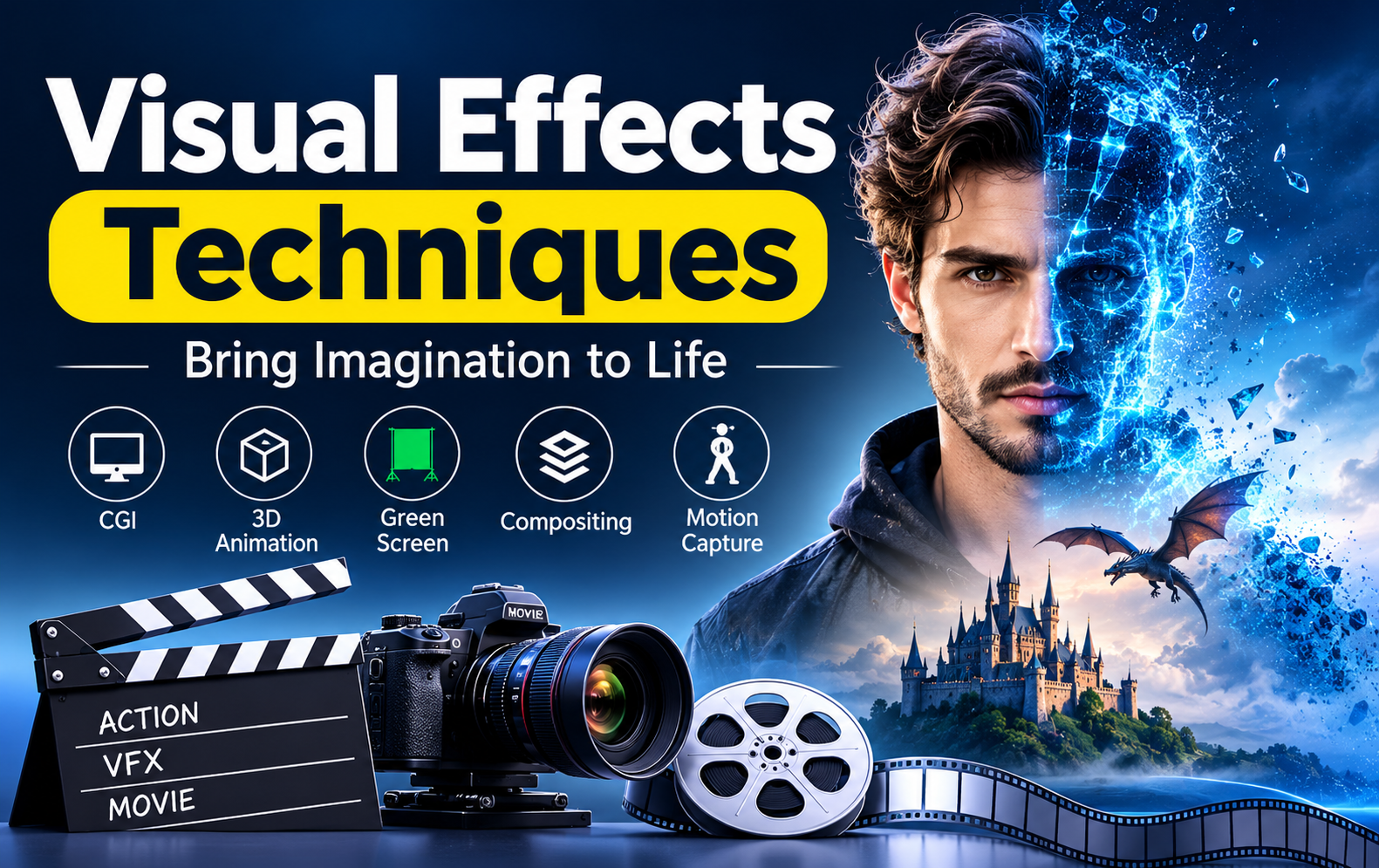
Movies, television shows, video games, and digital advertisements often feature scenes that look impossible in real life. These impressive visuals are created using visual effects techniques, which combine creative filmmaking with advanced digital technology. From realistic explosions to imaginary worlds, VFX helps filmmakers bring ambitious ideas to life.
What Are Visual Effects Techniques?
Visual effects techniques are methods used to create, modify, or enhance images in movies, television, video games, and other digital media. They combine live-action footage with computer-generated elements to produce scenes that would be difficult, expensive, or impossible to capture with a traditional camera.
Popular techniques include CGI, 3D modeling, digital compositing, green screen technology, motion tracking, and motion capture.
10 Popular Visual Effects Techniques Used Today
1. Computer-Generated Imagery (CGI)
Computer-generated imagery, commonly known as CGI, is one of the most widely used visual effects methods. Artists use specialized software to create digital objects, characters, environments, and entire scenes.
CGI is especially useful for science fiction, fantasy, and action movies. Filmmakers can create realistic creatures, futuristic cities, and detailed environments without building everything physically.
2. 3D Modeling and Animation
3D modeling involves creating digital objects and characters with three-dimensional shapes. Artists design everything from vehicles and buildings to animals and imaginary creatures.
After modeling, animators add movement using keyframes, character rigs, and other animation tools. This technique is essential for animated films, video games, and modern movie production.
3. Green Screen and Chroma Keying
Green screen technology allows filmmakers to replace a colored background with another image or video. During editing, software removes the selected color and makes the background transparent.
This method is frequently used in weather broadcasts, action movies, and virtual environments. Proper lighting and careful edge adjustments help make the final composition look natural.
4. Digital Compositing
Digital compositing combines multiple visual elements into one finished image. These elements might include live-action footage, CGI characters, backgrounds, lighting effects, and additional graphics.
Artists carefully adjust shadows, colors, transparency, and blending to make every layer appear as part of the same environment. Adobe explains how compositing, masks, and blend modes help create convincing visual scenes.
5. Motion Tracking
Motion tracking analyzes the movement of objects or cameras within recorded footage. VFX artists use this information to attach digital elements to moving subjects or environments.
For example, filmmakers can add computer-generated buildings, digital signs, or special effects that follow a moving camera. This technique is also useful for video stabilization and screen replacements.
6. Motion Capture Technology
Motion capture, often called mocap, records the movements of real performers and transfers them to digital characters. Depending on the production, artists may use specialized suits, cameras, markers, or markerless tracking systems.
This technique helps animators create believable human movements, facial expressions, and character performances. It is widely used in films, video games, and animated productions.
7. Rotoscoping
Rotoscoping is a technique used to isolate people or objects from their original backgrounds. Artists create or refine masks around moving subjects, often working frame by frame.
It is particularly useful when green screen footage is unavailable or when complicated details, such as hair and clothing, need careful separation. The isolated subject can then be placed into a different digital environment.
8. Particle Simulation and Dynamic Effects
Particle simulation creates effects such as smoke, fire, rain, dust, sparks, snow, and explosions. Software calculates how thousands of small elements behave and interact over time.
These simulations help make action scenes and digital environments more realistic. Artists can adjust movement, density, lighting, and physical behavior to achieve the desired appearance.
9. 3D Rendering and Lighting
Rendering converts a digital 3D scene into a finished image or animation. During this process, software calculates lighting, materials, shadows, reflections, and other visual details.
High-quality rendering helps digital objects blend naturally into live-action footage. Realistic lighting is especially important because even detailed CGI can look artificial when its illumination does not match the surrounding environment.
10. Virtual Production
Virtual production combines real-time computer graphics with traditional filmmaking. Large LED screens and game-engine technology allow filmmakers to display digital environments while actors perform on set.
This approach can reduce the need for certain location shoots and help directors visualize scenes during filming. Unreal Engine explains how virtual production supports previsualization, live compositing, and other filmmaking workflows.
How Visual Effects Techniques Work in Film Production
Professional VFX production usually follows several stages:
- Pre-production: Artists and directors plan effects, create storyboards, and develop visual concepts.
- Production: Filmmakers capture live-action footage, camera movements, and reference materials.
- Asset creation: Artists build digital characters, environments, and other 3D elements.
- Animation and simulation: Teams add movement, realistic effects, and character performances.
- Compositing: Different visual elements are combined into finished shots.
- Final rendering: Images are processed, reviewed, and prepared for the final production.
Each stage requires collaboration between artists, animators, editors, and technical specialists.
Software Used for Modern VFX Techniques
Several professional tools support visual effects production:
- Adobe After Effects: Compositing, motion graphics, masking, and video effects.
- Autodesk Maya: 3D modeling, character animation, and visual effects.
- Blender: 3D modeling, animation, simulation, and rendering.
- Unreal Engine: Real-time rendering and virtual production.
- Autodesk 3ds Max: 3D modeling, animation, and environment creation.
The best software depends on project requirements, production budgets, and the artist’s experience.
Why Visual Effects Are Important in Modern Entertainment
Visual effects give filmmakers greater creative freedom. They can produce imaginary locations, create realistic digital characters, and show events that would be unsafe or impractical to film.
VFX also supports advertising, education, product visualization, architecture, and interactive entertainment. According to the U.S. Bureau of Labor Statistics, special effects artists and animators had a median annual wage of $102,030 in May 2025. This highlights the professional opportunities associated with digital art and animation skills.
How to Learn Visual Effects Techniques
Beginners can develop VFX skills through consistent practice and structured learning.
Here are some practical steps:
- Learn basic video editing and composition.
- Start with beginner-friendly software such as Blender or After Effects.
- Practice green screen removal and simple compositing.
- Understand lighting, shadows, and color correction.
- Experiment with 3D modeling and animation.
- Create short projects for a professional portfolio.
- Study professional film scenes to understand how effects are constructed.
A strong portfolio and practical experience can help aspiring artists demonstrate their abilities to studios and clients.
Conclusion
Visual effects techniques have transformed modern filmmaking by making creative storytelling more realistic, flexible, and exciting. From CGI and motion capture to digital compositing and virtual production, each method serves a different purpose in creating impressive visual experiences.
Frequently Asked Questions (FAQs)
1. What are the most common visual effects techniques?
Some of the most common visual effects techniques include CGI, 3D animation, green screen technology, digital compositing, motion tracking, rotoscoping, and motion capture. These methods help filmmakers create realistic environments, digital characters, and impressive scenes that would otherwise be difficult to capture.
2. What is the difference between CGI and VFX?
CGI refers to computer-generated images, including digital characters, objects, and environments. VFX is a broader term that includes CGI along with compositing, motion tracking, green screen removal, and other methods used to enhance recorded footage.
3. Which software is best for learning visual effects techniques?
Blender is a popular starting point because it provides tools for 3D modeling, animation, simulation, and rendering. Adobe After Effects is another useful option for compositing and motion graphics. Beginners should choose software based on their learning goals and available computer hardware.
4. Are visual effects techniques used outside movies?
Yes. Visual effects techniques are used in television, video games, advertising, educational videos, architecture, product demonstrations, and virtual production. They help creators present information, build digital environments, and produce engaging visual content across different industries.
5. Can beginners learn VFX without a professional degree?
Yes. Beginners can learn VFX through online courses, tutorials, practice projects, and independent study. Understanding composition, lighting, animation, and editing is important. Building a strong portfolio of completed projects can also help demonstrate practical skills to potential employers and clients.
Read More: Wireless Headphones: Features, Benefits, Technology, and Buying Guide




One thought on “Visual Effects Techniques: 10 Methods Used in Modern Filmmaking”